
A Quick snapshot
Yes, residential schools are strict because of how they are structured to shape a child’s daily life, habits, and mindset.
At first glance, the discipline, fixed routines, and clearly defined rules may feel overwhelming—especially from a parent’s perspective. It’s natural to wonder whether such an environment might limit a child’s freedom. But when you look deeper, that same structure often becomes the foundation on which confidence is
It’s time to explore the specific mechanisms through which residential life transforms discipline into lasting confidence.
The Common Perception: Strict & Restrictive
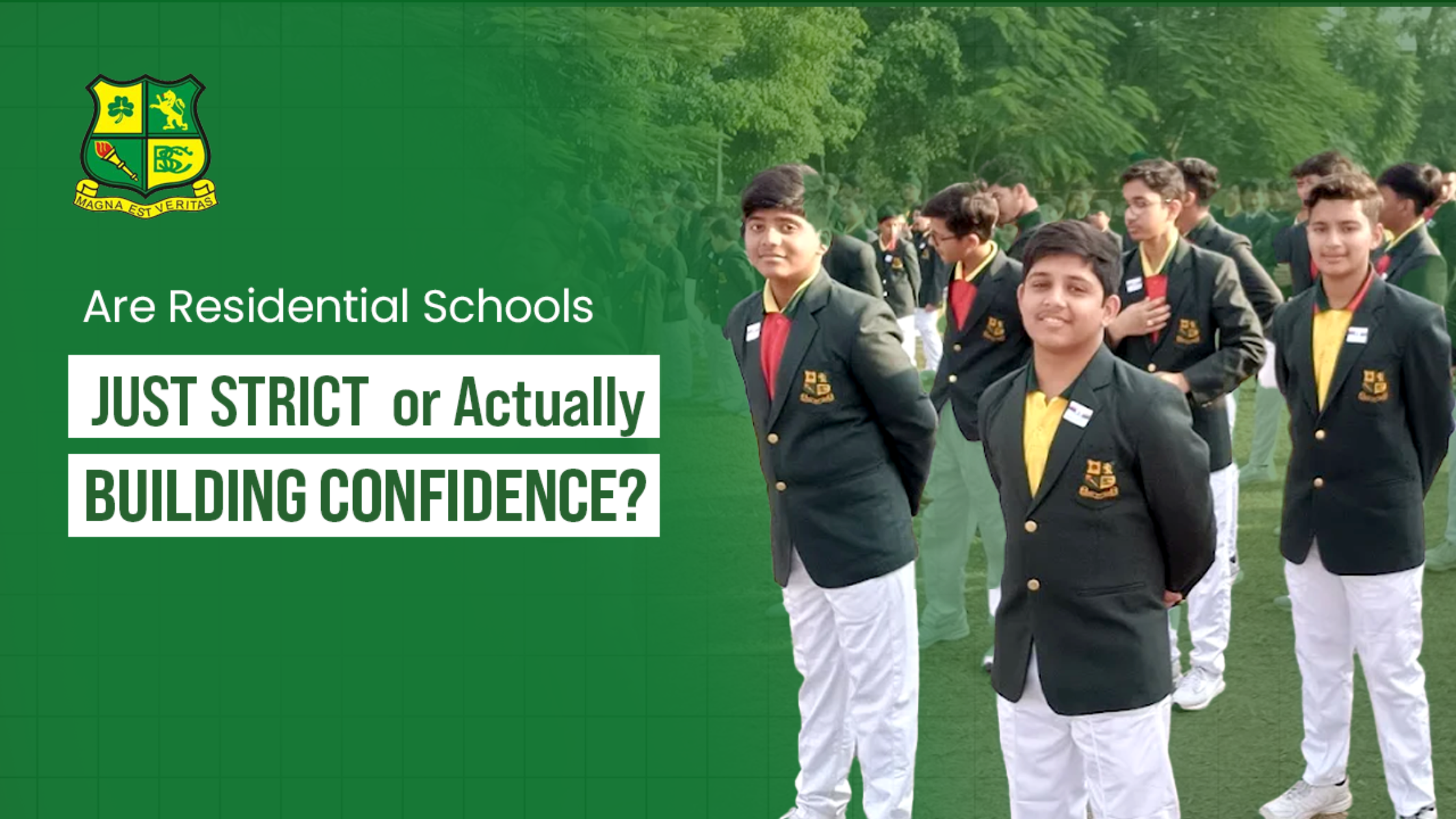
Let’s be honest—the first image that comes to mind when someone says residential school is often a stern warden, a military-style dormitory, or students marching in perfect uniform. Pop culture hasn’t helped much either, shaping the idea that these environments are rigid, overly controlled, and lacking personal freedom. As a result, parents begin to worry while students feel hesitant, assuming that such schools enforce obedience and limit individuality rather than encourage growth. This perception, though common, is built on a few strong assumptions.
- Residential schools take away personal freedom
- Strict rules suppress creativity and individuality
- Students are forced into a rigid, one-size-fits-all routine
- Discipline is prioritized over emotional well-being
- These environments produce followers, not independent thinkers
Confidence Building in Residential Schools
The best ICSE school in Dehradun goes beyond discipline and its routine. Their foundation is the confidence and independence instilled in their young men. With its structure and aid from educators and peers, and guidance from teachers and staff of Col-Brown, which is the best Boys’ boarding school in Dehradun, it helps develop each student to be not just academically but also personally and socially.
Key ways confidence is built
- Independence: Students become self-sufficient and responsible by residing away from home.
- Decision-Making Skills: Every day when making a choice builds both accountability and critical thinking skills.
- Communication & Social Skills: Socialising with students develops clarity, builds confidence, and encourages collaborative behaviour.
- Leadership Opportunities: Through the assignment of roles and participation in clubs and events, students are invited to take initiative and have responsibility.
- Dealing with Challenges in a Solo Manner: Students develop resilience to situations and can cope with things on their own.
Myth vs Reality
| MYTH“Residential schools cut students off from their families and real life.” | REALITYThey prepare students for real life more directly than any home setting can. Scheduled family interactions teach students to value connection, not take it for granted. |
| MYTH“Strict rules kill creativity and individuality.” | REALITYStructure actually creates mental space for creativity. When logistics are sorted, the mind is free to explore ideas — not manage chaos. |
| MYTH“Only academically weak or troubled students end up there.” | REALITYMany of the world’s most capable leaders, innovators, and thinkers are products of residential education — by deliberate parental choice, not desperation. |
How Residential Schools Build Confidence?
This is where the transformation truly begins.
1. Independence & Decision-Making
Being away from home gives you the chance to learn how to make good decisions, such as what is important, how to use your time, and how to deal with problems.
- There aren’t any shortcuts or parents to give you help all the time.
- Over time, you will begin to put trust in your own judgement.
- This is what develops a person’s self-confidence.
2. Communication & Social Skills
In a residential setting, students interact with peers from diverse backgrounds. They learn to express themselves, resolve conflicts, and collaborate effectively.
- Group discussions, dorm life, and shared responsibilities create everyday opportunities to grow socially.
- Because confidence isn’t just internal—it’s also how you connect with others.
3. Exposure Beyond Academics
One of the strongest pillars of Holistic Education is exposure, and residential schools offer plenty of it.
- From sports and arts to debates and leadership, students grow beyond textbooks.
- They discover strengths they didn’t know they had.
- And every new skill learned adds another layer to their confidence.
4. Leadership & Responsibility
Whether it’s leading a team, managing an event, or simply handling daily tasks, students are given real responsibilities.
- Not symbolic ones, Real ones.
- And when they succeed (and even when they fail), they learn resilience.
- Because confidence isn’t about never failing.
It’s about knowing you can handle it when you do.
Balancing Strictness with Support
The best residential schools aren’t just strict, they’re supportive. Mentors, counselors, peer learning systems, and emotional wellness programs sit alongside the rigorous schedules. Students aren’t thrown into the deep end; they’re coached through it.
The relationships formed in these environments between students, teachers, and mentors become lifelong. And those bonds? They teach empathy, trust, and belonging, three things no classroom lecture ever could.
A Thought to Close With
The next time you hear someone say a residential school is “too strict,” ask them this: strict compared to what? To an environment with no accountability, no structure, and no one pushing you to grow?
The rules are real. So is the discomfort. But so is the transformation.
What residential schools offer isn’t a softer childhood; it’s a stronger one. And for thousands of students every year, that distinction makes all the difference.