
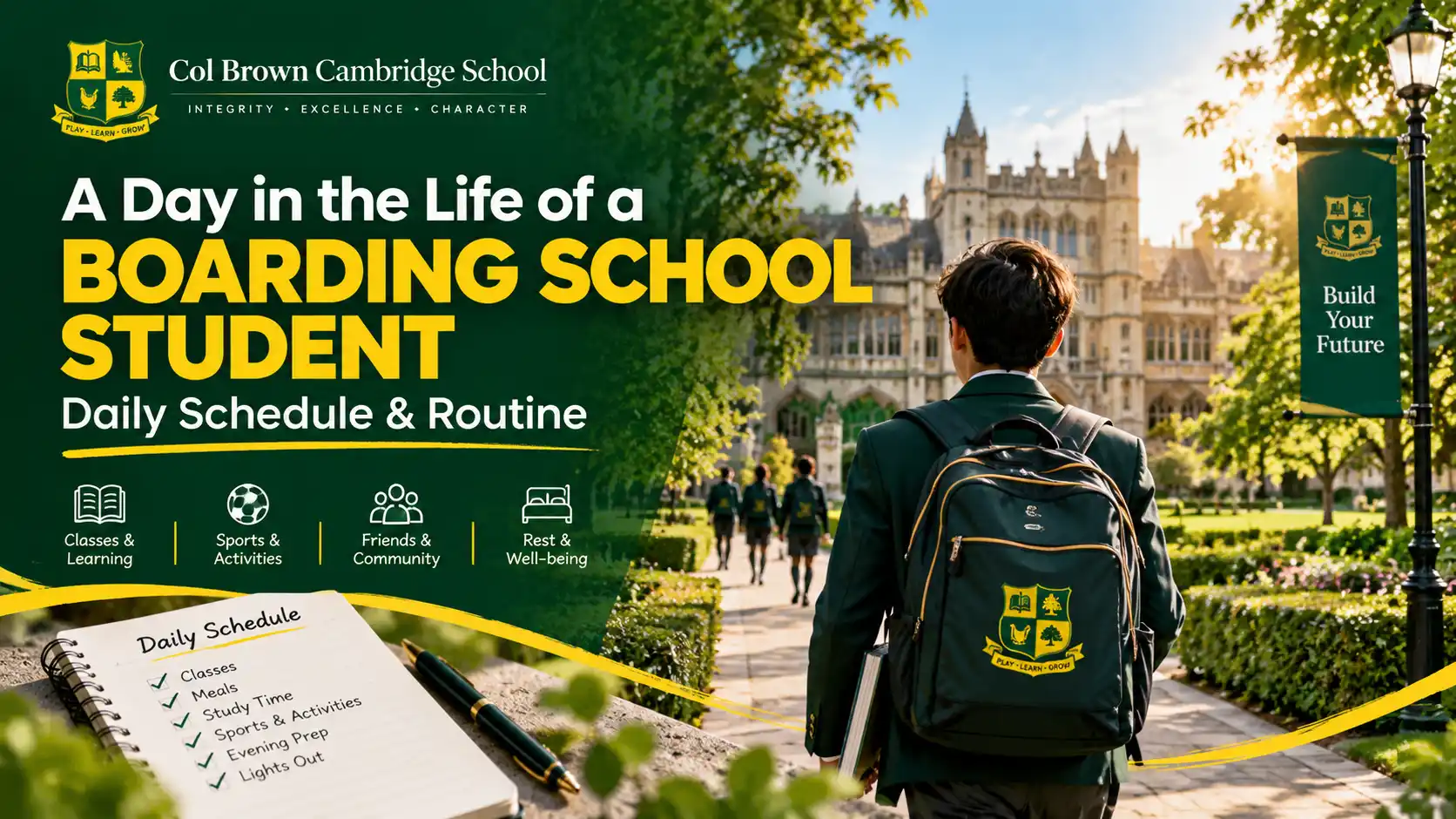
What does a normal day look like for a student living at a boarding school? Unlike a day scholar, a boarding student follows a routine that brings academics, meals, physical activity, study time, recreation, and rest into the same residential environment.
A boarding school day is usually structured, but that does not mean every minute follows the same timetable. Wake-up time, class hours, study periods, sports, meals, and bedtime can vary by school, age group, term, and day of the week.
Here is a closer look at what a day in the life of a boarding school student can involve and what parents should consider when evaluating a boarding school’s daily routine.
Early Morning Routine at a Boarding School
Boarding school mornings often begin early. Students wake up, get ready, organise their belongings, and follow the school’s morning schedule. At Col Brown, the published 2024 calendar records a 5:30 AM rising bell, followed by morning physical training from 6:00 AM to 6:30 AM.
Because students live on campus, they do not have a daily commute between home and school. Their morning can move directly from getting ready to physical activity and then into the academic day. For students, this part of the routine also involves managing personal belongings and preparing for the day ahead within the school’s schedule.
Morning PT, Breakfast and School Assembly
Physical training can be one of the first scheduled activities of the day. At Col Brown, the published calendar records regular morning PT from 6:00 AM to 6:30 AM. After PT, students have Chota Haziri, a light early-morning meal. Col Brown’s dining information describes Chota Haziri as including milk, brown bread, and honey.
Students then have breakfast before moving into the academic part of the day. Some boarding schools also include a school assembly as part of the morning routine. The exact order and timing can differ between schools, but the general purpose is to transition students from their residential routine into the school day.
When Do Classes Start at a Boarding School?
Academic classes form a major part of the boarding school daily schedule. At Col Brown, the school’s published calendar records regular classes beginning at 7:10 AM on a scheduled school day. However, this should be treated as a school-specific example rather than a standard start time for all boarding schools.
During academic hours, students attend regular classroom sessions and may also have practical or other learning activities. The number and length of classes depend on the school’s timetable and the student’s class level.
A boarding routine therefore combines formal classroom learning with other scheduled academic work rather than treating the school day as classroom hours alone.
Lunch Break and Midday Routine
After the morning academic schedule, students have lunch and a break before continuing with the rest of the day. Meals are an important part of residential life because students eat within the school community rather than travelling home between classes. Schools may also use meal and break periods as opportunities for students to interact with classmates and recharge before the next activity.
The timing of lunch and the length of the break can vary considerably between schools. Some students may then return to academic work, while others may move into practical sessions, co-curricular activities, or other scheduled activities.
Afternoon Classes and Extracurricular Activities
The afternoon routine can include a mix of academic and non-academic activities. Depending on the school and timetable, students may have practical sessions, library time, hobby classes, co-curricular activities, or additional academic work.
Col Brown’s published calendar, for example, includes hobby classes along with other scheduled activities. This illustrates how a boarding-school routine can extend beyond conventional classroom lessons. For students, this part of the day can provide a change of pace after the main academic sessions while still keeping them engaged in organised activities.
Evening Sports and Recreational Activities
Sports and games can form an important part of the afternoon or evening routine. The exact activities depend on the school, age group, season, and daily schedule. They may include organised games, sports practice, physical education, or recreational activities. Col Brown’s published information lists facilities such as a football field, cricket pitch, basketball court, and indoor games area. Its school calendar also includes regular games and football practice.
For students living together on campus, sports and recreation can also provide time to interact with friends and take a break from academic work.
Supervised Study Hours and Homework
Many boarding schools include a scheduled study or preparation period after regular classes and activities. This time can be used for revising lessons, completing assignments, reading, or preparing for upcoming tests. The amount and timing of study time depend on the school’s rules, timetable, and the student’s age or class. Col Brown’s published school calendar refers to night study as part of its routine.
A scheduled study period can help students separate academic work into a dedicated part of the day instead of leaving all assignments for unstructured personal time.
Dinner and the Evening Routine
Dinner generally takes place in the evening, followed by a quieter period before bedtime. Col. Brown’s published boarding information states that dinner is served at around 8:00 PM. After dinner, students may spend some time reading, writing letters, talking with peers, or engaging in other quiet activities.
This part of the evening can provide a transition between the more active parts of the day and the bedtime routine. The exact dinner timing and evening activities will vary from one boarding school to another.
Bedtime, Lights Out and Residential Supervision
The day eventually comes to an end with a fixed bedtime or lights-out period. Col Brown’s published boarding information places lights out around 9:30–10:00 PM. This timing is specific to the school’s published information and should not be assumed to apply to every boarding school.
Residential supervision also continues after regular school hours. At Col Brown, the boarding houses are supervised by full-time resident House Masters or House Mothers, with the school describing round-the-clock monitoring in its boarding information.
For parents, this is an important part of understanding boarding life: the daily routine continues beyond classroom hours and includes residential supervision as well.
What Does a Boarding School Student Do on Weekends?
Weekends may follow a different routine from regular school days. Depending on the school, students may have sports fixtures, competitions, clubs, recreational activities, outings, house activities, or additional supervised free time. Family communication and personal time may also form part of the weekend routine, depending on school rules.
The exact weekend schedule can vary even more than the weekday timetable. Parents should therefore ask the school what a normal weekend looks like rather than assuming that the weekday schedule continues unchanged.
How Can Parents Evaluate a Boarding School’s Daily Routine?
Before choosing a boarding school, parents should look beyond the timetable and assess how the day balances academics, physical activity, personal time, and rest.
- Academic Time: How much time is allocated to classes, practical learning, revision, and supervised study?
- Sports and Recreation: How often do students participate in sports, physical training, games, and other activities?
- Free Time and Breaks: Do students have enough time to relax, pursue hobbies, interact with friends, and enjoy their meals without feeling rushed?
- Supervision and Safety: Who supervises students after classes, during study hours, in boarding houses, and at night?
- Sleep and Bedtime: Are wake-up times, bedtimes, and daily workloads appropriate for students’ ages and needs?
- Communication and Support: How can students contact their parents, and what medical care or additional support is available?
- Weekend Routine: How do weekends differ from regular school days, and what activities or personal time are provided?
These questions help parents understand the actual residential experience and determine whether a school’s daily routine supports students’ academic progress, physical health, independence, and overall well-being.
Example of a Boarding School Daily Schedule
There is no single timetable followed by every boarding school. The schedule can change according to the school, class, term, activities, and day of the week.
The following is an illustrative example based on Col Brown School’s published information and calendar, rather than a universal boarding-school timetable.
| Time | Activity |
| 5:30 AM | Rising bell |
| 6:00–6:30 AM | Morning PT |
| After PT | Chota Haziri |
| Morning | Breakfast and school activities |
| From around 7:10 AM | Regular academic classes on the published school schedule |
| Late morning/afternoon | Academic sessions and scheduled activities |
| Afternoon | Lunch and break |
| Afternoon | Co-curricular, practical, hobby, or other scheduled activities |
| Late afternoon/evening | Sports and games |
| Evening | Supervised study or academic preparation |
| Around 8:00 PM | Dinner |
| 9:30–10:00 PM | Lights out |
Note: The timings above are based on published Col Brown School information and its 2024 calendar. They are an example of one school’s schedule and should not be treated as a fixed routine for every boarding school, class, or school day.
What Should Parents Ask About the Daily Routine?
Before choosing a boarding school, parents should ask about students’ daily schedules, including:
- What are the usual wake-up and bedtime hours?
- How much time is allocated to supervised study, sports, and recreation?
- Who supervises students outside classroom hours?
- Does the routine vary by age group?
- How can students contact their parents?
- What does a typical weekend look like?
- What medical care and additional support are available?
These questions help parents assess whether a school’s daily routine offers the right balance of academics, physical activity, rest, and personal well-being.
Final Thoughts
A day in the life of a boarding school student is about more than attending classes. The routine can combine academics, physical activity, meals, supervised study, recreation, residential life, and rest within the same environment.
For parents, the most useful question is not whether a boarding school has the earliest wake-up time or the longest study period. It is whether the daily routine provides a sensible balance of learning, activity, supervision, personal time, family communication, and rest.
Since schedules differ from school to school, understanding the actual weekday and weekend routine can help parents decide whether a particular boarding environment is a suitable fit for their child.
Frequently Asked Questions
1. Does the daily schedule stay the same every day?
No. A boarding-school routine can change according to the class, school calendar, activities, term, and day of the week.
2. Do all boarding schools follow the same timetable?
No. Wake-up times, class hours, meals, activities, study periods, and bedtime can vary between schools.
3. Do boarding school students have time for hobbies?
Yes. Depending on the school’s schedule, students may have hobby classes, co-curricular activities, sports, reading, or other recreational opportunities.
4. Can students use school facilities outside regular classes?
Yes. Facilities such as libraries, laboratories, and sports areas may also support reading, practical learning, activities, and scheduled programmes.
5. Does a boarding school routine change on weekends?
Usually, weekends can have a different schedule, with activities such as sports, clubs, competitions, recreation, outings, or additional personal time depending on the school.