
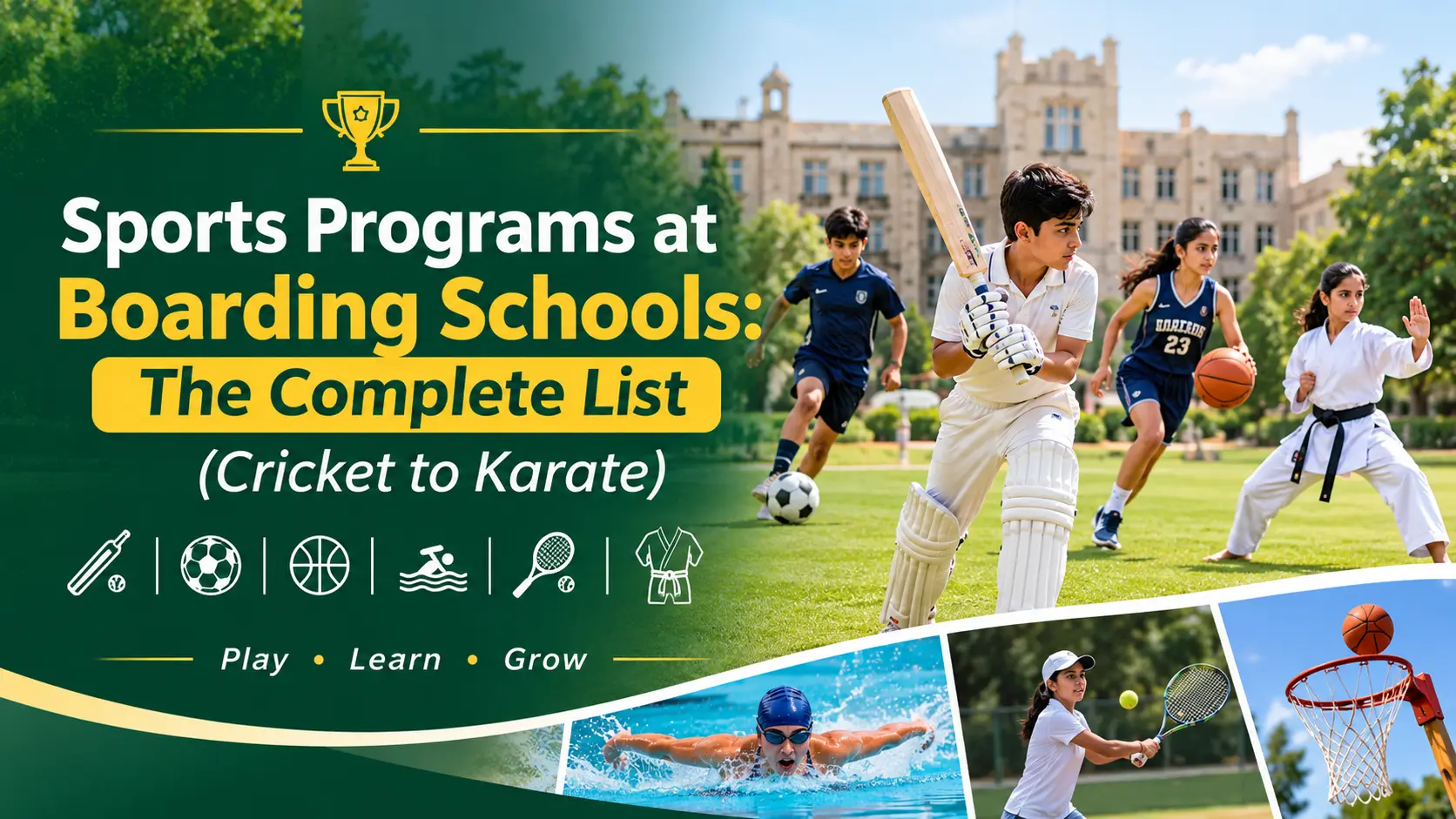
A boarding school experience extends beyond classroom learning. Alongside academic lessons and supervised study hours, students may have opportunities to participate in organized sports, recreational games, and physical fitness activities. These experiences allow them to explore different interests, develop practical skills, and interact with their peers.
From cricket, football, and basketball to swimming, badminton, athletics, and martial arts, sports programmes at boarding schools can include a wide variety of individual and team activities. The options available, however, depend on each school’s infrastructure, coaching resources and activity schedule.
For parents comparing residential schools, the number of sports offered is only one consideration. The quality of coaching, opportunities for beginners, frequency of practice and safety arrangements are equally important when evaluating a school’s sports programme.
Why Are Sports Important in Boarding School Education?
In a boarding school, sports are an organised part of students’ daily experiences rather than occasional recreational activities. Regular participation gives students opportunities to stay physically active, interact with peers, manage challenges, and develop interests outside the classroom.
The CBSE Health and Physical Education Curriculum for 2026–27 recognises physical education as an important part of holistic learning, covering physical, mental, emotional, and social well-being.
Participation in different sporting activities can contribute to students’ development in several ways:
- Physical fitness and coordination: Running, swimming, gymnastics, and other activities help students develop endurance, strength, flexibility, and movement skills.
- Decision-making: Games such as chess, basketball, and football require students to assess situations and make decisions within limited time.
- Teamwork and communication: Team sports encourage students to understand shared responsibilities, coordinate with others, and work towards common objectives.
- Emotional resilience: Competitions expose students to both success and setbacks, helping them practise patience, perseverance, and sportsmanship.
- Self-management: Regular training encourages students to follow routines, set personal goals, and take responsibility for their progress.
The benefits also depend on regular participation and age-appropriate activities. A balanced programme should give students opportunities to enjoy physical activity without creating unnecessary competitive pressure.
Complete List of Sports Programs Offered at Boarding Schools
Sports programmes at boarding schools generally include a combination of team games, individual competitions, indoor activities and fitness-based disciplines. The actual selection depends on campus facilities, coaching availability, students’ age groups, and institutional priorities.
Understanding these categories helps parents compare not only the number of activities offered but also the different ways students can participate.
1. Cricket
Cricket remains one of the most popular school sports in India. It combines technical ability with strategic thinking and teamwork.
Students learn batting, bowling, fielding, match awareness, and game strategies. Regular practice matches can help them understand different playing situations and improve their decision-making abilities.
2. Football
Football develops cardiovascular endurance, coordination, speed, and teamwork. Students learn ball control, passing, dribbling, positioning, and defensive techniques.
Its continuous gameplay also encourages quick thinking and communication between teammates.
3. Hockey
Hockey introduces students to stick-handling, passing accuracy, movement, and tactical coordination. It requires players to remain alert and work collectively throughout the game.
4. Basketball
Basketball focuses on agility, balance, coordination, and teamwork. Students practise dribbling, shooting, passing, rebounding, and defensive positioning.
5. Volleyball
Volleyball develops reflexes, coordination, and communication. Players learn serving, setting, spiking, blocking, and defensive techniques while working together to keep the ball in play.
6. Badminton
Badminton is an individual or doubles sport that develops quick reflexes, footwork, balance, and hand-eye coordination. Students learn different strokes, serving techniques, and court positioning.
7. Tennis
Tennis combines physical endurance with concentration and tactical awareness. Training generally covers serving, forehand and backhand strokes, volleys, and movement across the court.
8. Swimming
Swimming provides a full-body physical activity and helps develop coordination, stamina, and water confidence. Structured instruction should include swimming techniques and water safety practices.
9. Athletics and Track and Field
Athletics includes several individual disciplines that allow students to explore different physical abilities.
Common events include:
- Sprinting and middle-distance running
- Long-distance running
- Long jump and high jump
- Shot put
- Relay races
- Hurdles
These activities help students work on speed, strength, endurance, and technique.
10. Karate and Other Martial Arts
Karate introduces students to controlled movements, balance, concentration, and self-discipline. Training can include basic stances, punches, blocks, kicks, and structured forms.
Depending on the institution, other martial arts may also be available.
11. Skating and Gymnastics
Skating develops balance, coordination, and body control, while gymnastics focuses on flexibility, strength, stability, and movement precision.
Both activities require age-appropriate instruction and suitable safety equipment.
12. Indoor Games
Outdoor sports are not the only way students can develop their abilities. Indoor games provide opportunities to practise concentration, patience, and strategic thinking.
Common options include:
- Table tennis
- Chess
- Carrom
- Indoor badminton
- Pool or billiards, where available
Yoga and structured physical training may also form part of a school’s broader fitness programme.
How Do Boarding Schools Organise Sports Training and Competitions?
A sports programme involves more than assigning students a playground or scheduling occasional matches. Boarding schools need an organised approach that accommodates regular practice, different skill levels, and opportunities to participate in competitions.
Some important elements of sports organisation include:
1. Scheduled Training Sessions
Students participate in sports during designated activity periods. Regular sessions allow them to practise fundamental techniques, improve fitness, and develop familiarity with the rules of their chosen games.
2. Beginner and Advanced Training
Students may enter a sports programme with different levels of experience. Suitable training arrangements allow beginners to learn basic techniques while more experienced players work on advanced skills and competitive preparation.
3. House-Based Sports Events
Many residential schools organise inter-house competitions in which students represent their respective houses. These events provide opportunities for participation, team coordination, and friendly competition.
4. Inter-School Competitions
Inter-school tournaments allow students to compete against participants from other institutions. Depending on the sport and competition structure, these events may provide exposure to district, state or higher-level competitions.
5. Fitness and Physical Education Sessions
General fitness activities complement sport-specific training. Running, stretching, strength exercises, and movement activities help students develop physical abilities that support participation in different sports.
The Government of India’s Khelo India programme also recognises school-level sports competitions, talent development, sports infrastructure, and physical fitness as important areas of sports development.
Together, these arrangements help schools create a more organised sporting environment where students can participate recreationally or work towards improving their competitive performance.
Sports Facilities at Boarding Schools: What Does the Infrastructure Include?
A good sports environment requires more than a large playground. Different activities need appropriate spaces, equipment, and safety arrangements.
Depending on the sports offered, facilities may include:
| Facility | Activities Supported |
| Outdoor playgrounds | Cricket, football, and hockey |
| Basketball and volleyball courts | Court-based team sports |
| Indoor sports areas | Badminton, table tennis and chess |
| Swimming pool | Swimming instruction and practice |
| Athletics facilities | Running, jumping, and field events |
| Martial arts training space | Karate and related activities |
Col. Brown Cambridge School, Dehradun, provides an example of a boarding school that publishes information about a varied sports and recreation offering. Its official infrastructure page lists facilities for cricket, football, hockey, basketball, karate, and athletics, along with indoor game areas and a swimming pool.
Its separate sports page also describes activities such as badminton, tennis, skating, swimming, chess, and carrom. Parents can refer to the school’s infrastructure details and Sports at CBS page for further information.
How to Evaluate a Boarding School’s Sports Programme
When comparing boarding schools with sports facilities, parents should look beyond the number of games mentioned on a school’s website.
Some important aspects to examine include:
- Variety of activities: Does the school offer both team and individual sports?
- Coaching arrangements: Are students guided by qualified and appropriately experienced instructors?
- Participation opportunities: Can beginners participate, or are activities limited to advanced players?
- Infrastructure: Are the grounds, courts, equipment, and indoor facilities suitable for the activities offered?
- Safety measures: Are supervision, first aid, and appropriate protective equipment available?
- Academic balance: Does the timetable provide sufficient time for studies, rest, and physical activities?
These factors provide a more realistic understanding of the school’s approach to sports and student development.
What Safety Measures Should Parents Check in a Boarding School Sports Programme?
Before enrolling a child, parents should understand how the school manages safety during sports and physical activities. Important considerations include:
- Qualified supervision: Check whether coaches and instructors have relevant training and experience for the sports they teach.
- First-aid and medical support: Ask how injuries are handled and whether students can access prompt medical assistance.
- Equipment maintenance: Sports equipment, courts, playgrounds, and training areas should be inspected and maintained.
- Swimming safety: Check instructor qualifications, supervision arrangements, pool rules and emergency procedures.
- Protective equipment: Activities such as cricket, hockey, skating, and martial arts may require sport-specific protective gear.
- Age-appropriate training: Practice intensity and activities should suit students’ age, abilities, and experience.
- Inclusive participation: Students with different abilities and experience levels should have suitable opportunities to participate.
Conclusion
A well-organised sports programme can add an important dimension to a student’s boarding school experience. From team games and individual sports to fitness activities and martial arts, different options allow students to discover their interests and participate according to their abilities.
However, the value of a school’s sports programme cannot be measured by the number of activities listed on its website alone. Parents should also examine coaching arrangements, practice schedules, infrastructure, safety measures, and opportunities for students at different skill levels.
During a school visit, ask to see the sports facilities, understand the activity timetable, and find out how students participate in training and competitions. These details can help you assess whether the school’s sporting environment genuinely supports regular participation and student development.
Frequently Asked Questions
1. What is the difference between intramural and inter-school sports competitions?
Intramural competitions take place within the same institution, while inter-school competitions involve teams or individual participants representing different schools.
2. What is a round-robin format in school sports tournaments?
In a round-robin tournament, every participating team competes against the other teams in its group, allowing results to be determined through cumulative performance.
3. How are age categories determined in school sports competitions?
Age categories are generally based on the participant’s date of birth and the eligibility rules specified by the organising school, sports association, or competition authority.
4. What is the difference between an umpire and a referee in sports?
Both oversee rule enforcement, but their titles vary by sport. Cricket uses umpires, whereas football and basketball use referees or officials under their respective rules.
5. What is the purpose of a sports seeding system in tournaments?
Seeding ranks participants or teams according to previous performance or other competition criteria to determine their placement in a tournament draw and potentially avoid early matchups between higher-ranked competitors.